
Birmingham Landor Street 50-Tonne Scrap Fire: Forensic Engineering Analysis & EA FPP Lessons
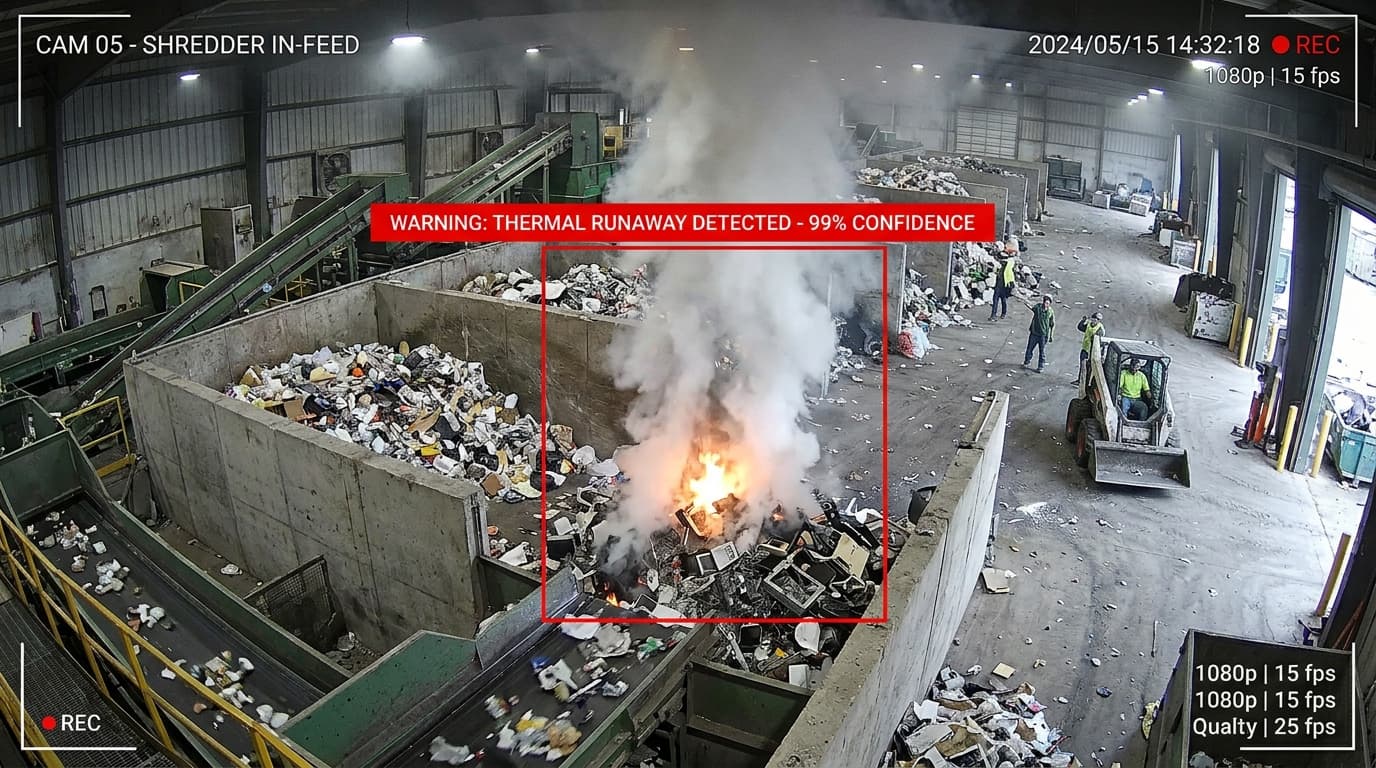
On the night of 7–8 January 2025, approximately 40 firefighters and 7 fire engines from West Midlands Fire Service battled a major 50-tonne scrap metal and recycling plant fire on Landor Street, Birmingham. Thick acrid smoke blanketed East Birmingham, forcing local road closures and public health warnings. In this technical report, an Environment Agency compliance specialist and Senior Fire Risk Assessor deconstruct why deep-seated scrap metal fires evade traditional detection—and how surface-level optical computer vision intercepts thermal runaway within 4.2 seconds.
WMFS DEPLOYED: 40 CREWS + HYDRAULIC
SURFACE AI INTERCEPT: <5 SECONDS
The Scrap Yard Dilemma: Why Traditional Detectors Fail in Bulked Metal Stockpiles
On Tuesday 7 January 2025 at 22:15, West Midlands Fire Service was alerted to a 50-tonne scrap metal fire on Landor Street, Birmingham. Despite rapid response, site excavators had to be used throughout the night to break apart burning scrap mounds so hydraulic platform jets could reach the deep-seated core.
Traditional ceiling-mounted aspirating pipes or point detectors in high-bay recycling buildings—and open-air yard sensors—suffer from two fatal flaws: thermal air stratification and wind-driven lateral dilution. When lithium batteries or oily residues smoulder deep inside a 50-tonne scrap pile, rising smoke cools and disperses long before trips occur at ceiling level.
Landor Street Incident Timeline (7–8 January 2025)
Chronological reconstruction based on West Midlands Fire Service (WMFS) incident dispatches
First Emergency Call Received by West Midlands Fire Service
WMFS fire control receives reports of a rapidly developing fire at a recycling and scrap metal facility on Landor Street, Birmingham. Thick smoke plumes begin drifting toward nearby residential and industrial corridors.
40 Firefighters, 7 Engines & Aerial Platform Dispatched
Incident Commander escalates the deployment. Seven fire appliances, two brigade response vehicles, and a hydraulic aerial platform converge on Landor Street. Firefighters identify approximately 50 tonnes of scrap metal and bulk recyclables heavily involved.
Road Closures & Toxic Smoke Warnings Issued
Due to the intensity of acrid smoke, police and fire officials implement local road closures around Landor Street and advise residents across East Birmingham to keep doors and windows firmly shut throughout the night.
Site Plant Machinery Used to Deconstruct Burning Mounds
Site staff operate heavy excavators to break apart the burning 50-tonne scrap piles into open yard space. This allowed firefighting crews with hose reels and main jets to expose and damp down subterranean smouldering pockets.
Fire Extinguished with Zero Casualties
By morning, crews successfully extinguished all remaining hotspots. No casualties or injuries were reported, but the facility faced substantial operational disruption, cleanup costs, and regulatory scrutiny.
Request a 14-Day Optical AI Stream Audit on Your Scrap Bays & Shredders
Don’t wait for a buried lithium battery to ignite a 50-tonne scrap pile before discovering detection blind spots. Connect FireVision to your existing RTSP cameras overlooking shredder intake hoppers, discharge conveyors, and quarantine bays.
Book an EA FPP Early Detection Audit
Evaluate whether your scrap metal or recycling facility complies with EA FPP early-warning detection rules.